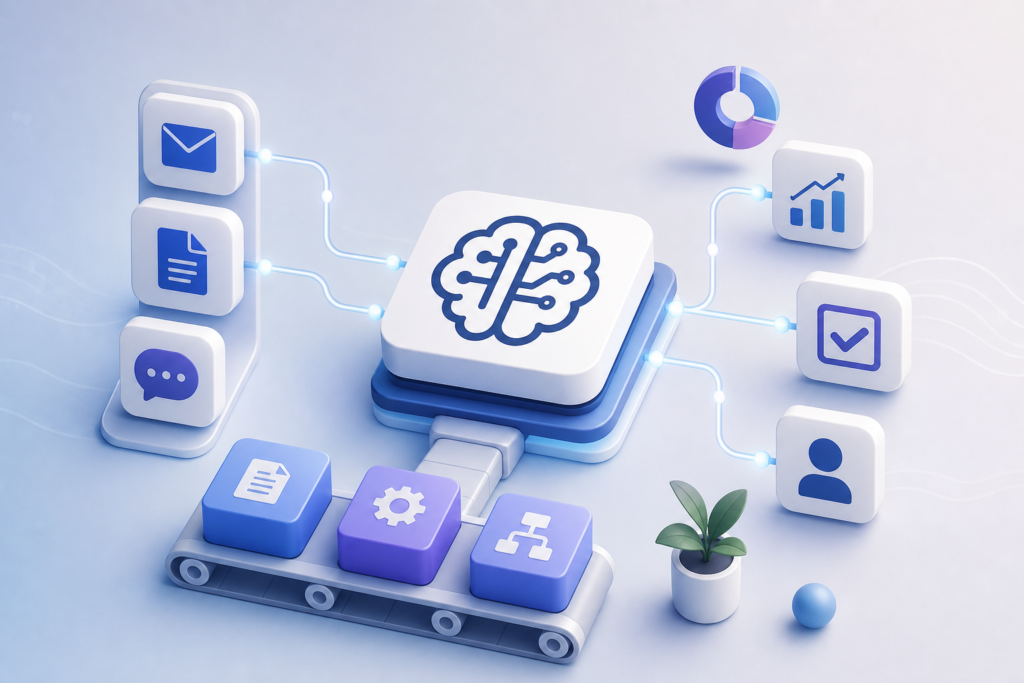
Introduction to AI Automation
In today’s fast-paced business environment, small businesses often face the challenge of managing multiple tasks efficiently. AI automation presents a powerful solution to streamline operations, helping businesses reduce repetitive manual work and improve overall productivity. By integrating AI tools into regular workflows, small businesses can achieve greater efficiency and focus more on strategic initiatives.
Identifying Repetitive Tasks
The first step towards successful AI automation is identifying tasks that can be automated. Typical areas include:
- Data Entry: Automating data collection and entry can save time and minimize errors.
- Email Management: AI can filter, categorize, and even respond to routine emails.
- Customer Support: Chatbots can handle FAQs, freeing up team members for complex inquiries.
- Reporting: Automating report generation allows for real-time data insights with minimal manual input.
By pinpointing these tasks, businesses can prioritize automation efforts, leading to significant time savings and improved workflow efficiency.
Case Studies of Successful AI Implementation
Understanding practical applications of AI automation can provide inspiration. Here are a couple of succinct case studies:
1. E-commerce Business
A small e-commerce retailer implemented AI agents to handle customer inquiries and manage inventory updates. This integration reduced response times by 50% and freed valuable human resources for more strategic tasks, ultimately boosting sales by 30%.
2. Marketing Agency
A digital marketing agency adopted workflow automation tools to streamline content approvals and social media posting schedules. This shift reduced the administrative burden by 40%, allowing the team to devote more time to creative strategies and client engagement.
Choosing the Right Tools
There are numerous automation tools on the market, making it crucial for small businesses to make informed choices. Consider these factors:
- Ease of Use: Opt for tools with user-friendly interfaces that don’t require extensive technical knowledge.
- Integration: Ensure the automation software can seamlessly integrate with existing systems, such as WordPress plugins for content management.
- Scalability: Your automation solution should be able to grow with your business, accommodating increasing data volumes or complexity.
- Support and Training: Choose providers that offer robust support and training resources to help you maximize the tool’s benefits.
Investing time in selecting the right tools can pay off significantly in automation success.
Measuring Success and Productivity Improvements
Once AI automation is implemented, measuring its impact on productivity and efficiency is essential. Here are some key metrics to track:
- Time Savings: Monitor how much time employees save on repeated tasks.
- Error Rate: Assess whether automation reduces errors compared to manual processes.
- Cost Reduction: Evaluate any inherent cost savings from decreased labor hours or increased output.
- Employee Satisfaction: Gauge employee feedback to see how automation has affected their workloads.
Regular assessment allows businesses to refine their automation strategies and maximize positive outcomes.
Conclusion
AI automation represents a viable solution for small businesses looking to enhance productivity and streamline workflows. By identifying repetitive tasks, implementing effective tools, and measuring success, businesses can leverage the benefits of automation. As these technologies continue to evolve, now is the time for businesses to explore how AI can transform their operations.
If your business is looking to explore AI automation further or if you want to know how AI agents can fit into your workflow, contact SamSiyu today to discuss tailored solutions that can meet your specific needs.
FAQs
What is AI automation?
AI automation involves using artificial intelligence technologies to perform tasks without human intervention, allowing businesses to streamline operations and improve efficiency.
How can small businesses benefit from AI automation?
Small businesses can enhance productivity, reduce errors, and free up employee time from repetitive tasks, enabling them to focus on more strategic projects.
What tasks are typically automated in small businesses?
Common tasks include data entry, email management, customer support via chatbots, and automated reporting.
How do I measure the success of my automation efforts?
Track metrics such as time savings, error rates, cost reductions, and employee satisfaction to evaluate the effectiveness of your automation implementation.