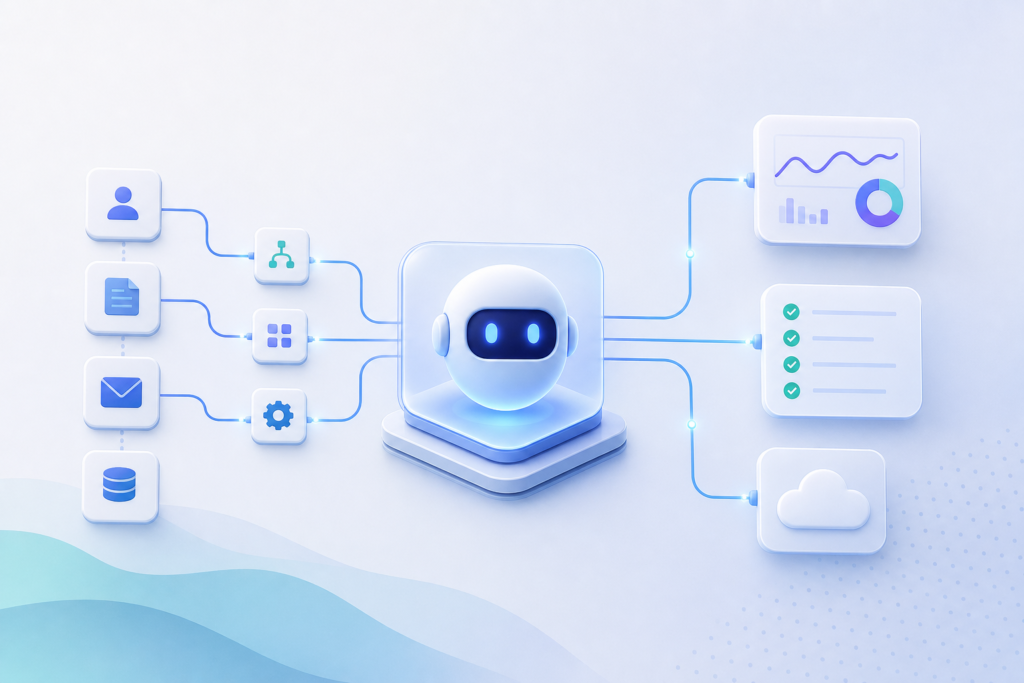
Introduction to AI Agent Development
In today’s digital landscape, businesses are increasingly looking to leverage artificial intelligence (AI) to enhance their operations. AI agents can automate tasks, streamline workflows, and provide valuable insights, making them essential tools for small and medium-sized businesses. This guide aims to assist beginners in designing and deploying their first AI agent, ensuring it aligns with specific business needs.
Defining Your Agent’s Purpose
Before diving into development, it is crucial to define the purpose of your AI agent. Consider the following questions:
- What specific tasks do you want to automate?
- How will this agent add value to your business?
- Who will interact with the agent, and what are their needs?
Defining the purpose ensures that your AI agent is aligned with your business objectives, whether it’s for lead generation, customer support, or content management.
Tools and Platforms to Use
There are various tools and platforms available for building AI agents, and your choice will depend on your specific requirements and technical expertise:
- Dialogflow: Ideal for natural language processing, Dialogflow can help you create conversational agents for customer support.
- Rasa: An open-source framework that allows for more customized AI agent experiences without vendor lock-in.
- Microsoft Bot Framework: A comprehensive toolset for building, testing, and deploying intelligent bots across a variety of platforms.
- Custom Scripts: If you have programming experience, consider building a custom AI agent using languages like Python along with libraries such as TensorFlow or PyTorch.
Implementation Steps
Once you’ve defined your agent’s purpose and selected a platform, follow these steps for implementation:
- Set Up Your Environment: Install any necessary tools or software. Ensure you have the infrastructure in place to support your AI agent.
- Develop the Agent: Start coding your agent or using a no-code/low-code platform to build it. Focus on user interaction and how the agent will process inputs.
- Integrate APIs: For functionality, connect your agent to necessary APIs (e.g., CRM systems, databases) to fetch and send data as needed.
- Create a User Interface: Depending on your end-users, design an interface that is intuitive and easy to navigate.
Testing and Optimizing Your Agent
Once your agent is developed, it’s time for rigorous testing. This phase is vital to ensure functionality and user satisfaction. Consider the following strategies:
- Conduct User Testing: Enlist colleagues or target users to interact with the agent and provide feedback.
- Monitor Performance: Use analytics tools to track user interactions and identify areas for improvement.
- Iterate and Optimize: Based on feedback and performance data, make necessary adjustments to enhance usability and efficiency.
Effective testing can reveal unexpected issues and help optimize the user experience, ultimately leading to a more successful AI agent deployment.
FAQs
What skills do I need to build an AI agent?
Basic programming skills will help, especially in languages such as Python. Familiarity with APIs and natural language processing concepts is also valuable.
Can I build an AI agent without coding?
Yes, there are no-code platforms available that enable you to create AI agents through user-friendly interfaces.
What industries can benefit from AI agents?
Virtually any industry can benefit, including customer service, marketing, sales, and content management.
Conclusion
Building your first AI agent might seem daunting, but with clear objectives and the right tools, it can transform your business operations. If you’re interested in leveraging AI for your workflow, consider exploring SamSiyu’s AI agent development services. Together, we can develop custom solutions tailored to your specific needs.