In the modern business landscape, customer relationship management (CRM) systems play a crucial role in maintaining and nurturing customer interactions. When paired with AI, these systems become even more powerful, driving efficiency and personalizing the customer experience. This guide will explore the integration of AI with CRM systems and how businesses can leverage this technology to enhance their operations and customer relationships.
Overview of CRM Systems and AI
Customer relationship management (CRM) systems are essential tools that help businesses manage customer interactions, track sales, and analyze customer data throughout the customer lifecycle. By utilizing AI agents within these systems, companies can automate and optimize various processes.
AI can analyze vast amounts of data, identify trends, and generate insights that would take humans much longer to complete. This capability allows businesses to make informed decisions quickly and improve customer satisfaction through tailored services.
Defining AI in CRM
AI agents integrated into CRM systems can perform a variety of tasks, such as:
- Automating data entry and updates.
- Providing personalized customer experiences through predictive analytics.
- Facilitating customer support with chatbots.
- Identifying potential leads and opportunities through data analysis.
Each of these functions not only saves time but enhances the quality of customer interactions, laying a strong foundation for long-term relationships.
Benefits of AI Integration
Integrating AI with your CRM system can transform how your business interacts with customers. Here are some significant benefits:
1. Enhanced Data Management
AI agents can automate repetitive tasks, such as data entry and customer updates, reducing the chances of human error. This leads to improved data accuracy and efficiency within your CRM system.
2. Improved Customer Insights
With AI, businesses can gain deeper insights into customer behavior. Predictive analytics helps you understand customer preferences, allowing for tailored marketing strategies and product recommendations.
3. Increased Efficiency
Automating customer support and lead generation processes reduces the workload on your human resources, enabling them to focus on more complex tasks that require human intuition.
4. Personalized Customer Experiences
AI can segment customers based on their behaviors and past interactions, providing a more personalized approach that enhances customer satisfaction and loyalty.
Step-by-Step Integration Example
Integrating AI with your CRM can be broken down into several manageable steps:
Step 1: Define Your Objectives
Before starting the integration process, outline what you aim to achieve. Are you looking to enhance customer support, streamline processes, or provide personalized experiences?
Step 2: Choose the Right AI Tools
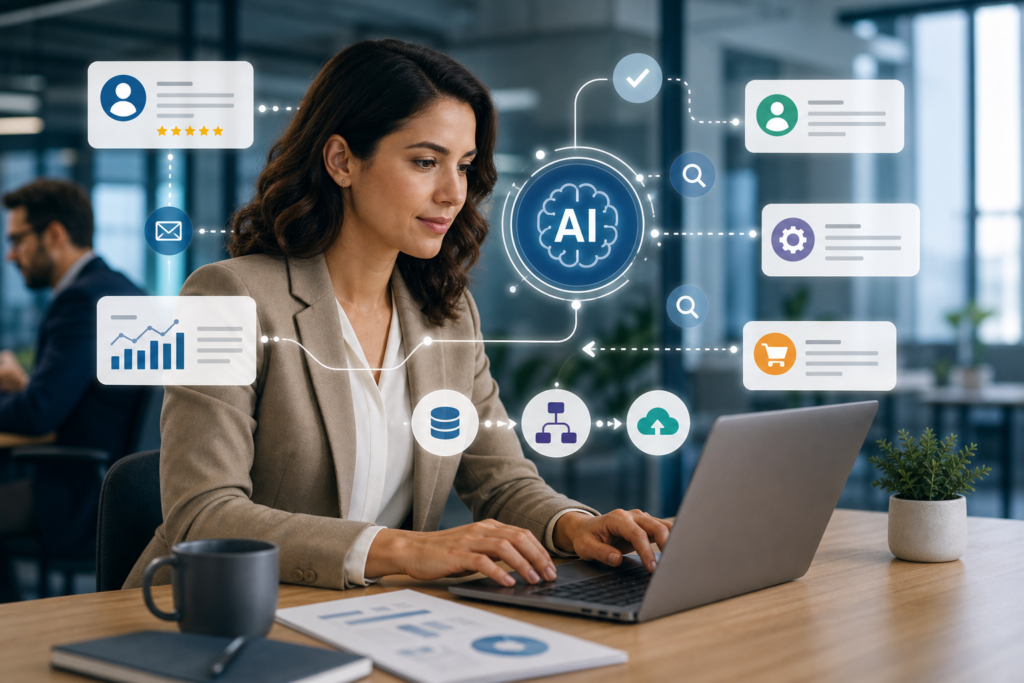
Select AI tools that align with your objectives. Ensure they can integrate seamlessly with your existing CRM systems.
Step 3: Data Preparation
Clean and organize your data. AI agents rely on high-quality, structured data to produce meaningful insights.
Step 4: Implement the AI Solution
Work with professionals, like SamSiyu, who specialize in AI integration to deploy the chosen solutions. This may involve coding, configuring settings, and ensuring the new systems communicate effectively with your existing infrastructure.
Step 5: Train Your Team
Provide training to your team on how to utilize the new AI features within your CRM effectively. Familiarity with these tools will enhance productivity.
Step 6: Monitor and Evaluate
After implementation, monitor performance metrics and gather feedback to understand how AI integration is impacting your business. Adjust strategies as necessary.
Case Study of Successful Implementation
Consider a mid-sized e-commerce company that integrated AI into their CRM system to better manage customer inquiries. By employing AI chatbots, they reduced response times from hours to mere minutes. The company also used AI to analyze purchasing patterns, leading to more targeted marketing campaigns that increased sales by 20% within six months.
The key to their success was a clear understanding of their goals, careful selection and implementation of the AI tools, and ongoing evaluation of their outcomes.
FAQ
What types of AI agents can be integrated with CRMs?
You can integrate several types of AI agents with CRMs, including chatbots for customer support, predictive analytics tools for customer behavior insights, and lead scoring algorithms that help prioritize potential clients.
Is AI integration with CRM systems expensive?
The cost of AI integration can vary significantly depending on the tools you choose and the complexity of your CRM systems. However, many businesses find that the long-term benefits often outweigh the initial investment.
How can I assess if my business is ready for AI integration?
Evaluate your current processes, data readiness, and employee technological proficiency. If you have repetitive tasks and significant customer interactions needing improvement, your business may be well-positioned for AI integration.
Unlock the Power of AI in Your CRM
Adopting AI within your CRM systems can significantly enhance operational efficiency and customer satisfaction. By following industry best practices, businesses can realize the full potential of AI integration. If you’re considering how AI agents can transform your workflow, we invite you to talk to SamSiyu. Explore how a custom AI agent tailored to your existing systems might streamline your operations and improve customer interactions.