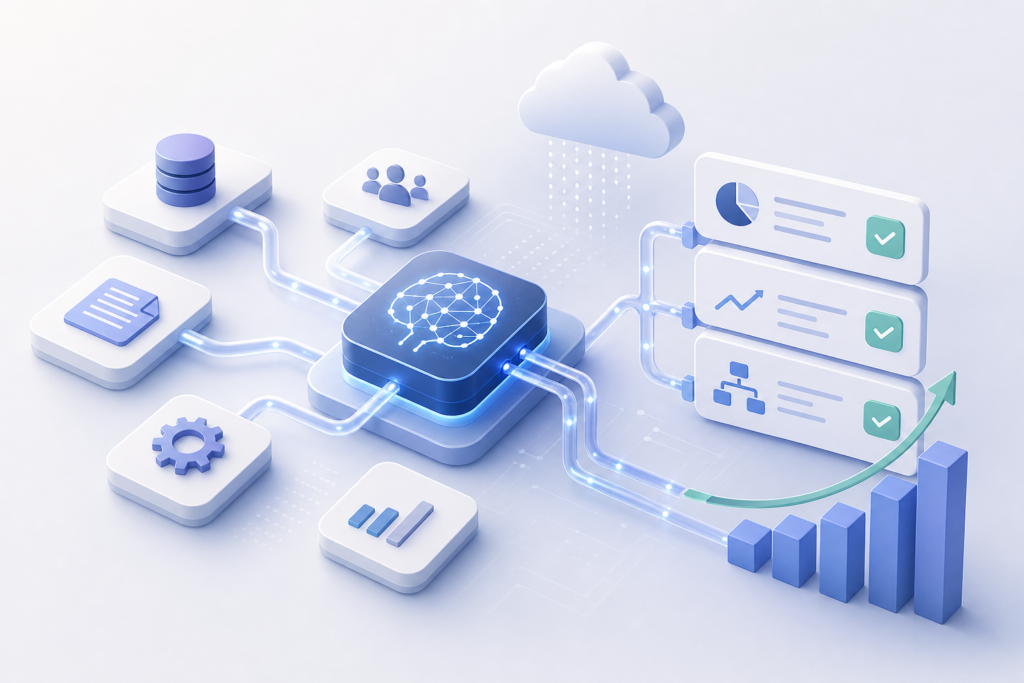
Introduction to AI in Business
Artificial Intelligence (AI) has become a pivotal component in the modern business landscape. Companies across various sectors are integrating AI to optimize operations, enhance decision-making, and automate repetitive tasks. Rather than merely a trend, the practical application of AI can lead to substantial improvements in efficiency and productivity. This article explores several real-world use cases that demonstrate how businesses successfully implement AI to improve their operations and workflows.
Diverse Applications in Various Sectors
The application of AI in business spans different industries, including retail, healthcare, finance, and manufacturing. Each sector finds unique ways to harness AI capabilities:
- Retail: AI is transforming customer experiences through personalized recommendations and inventory management. Retail giants analyze consumer behavior data using AI algorithms to predict trends and optimize stock levels.
- Healthcare: AI applications streamline patient care by providing data-driven insights for diagnosis and treatment plans. Machine learning models help in analyzing vast datasets faster than traditional methods.
- Finance: Financial institutions employ AI for fraud detection and risk assessment. Algorithms monitor transactions in real-time, flagging suspicious activities efficiently.
- Manufacturing: AI optimizes supply chain and production processes through predictive maintenance. By analyzing machinery data, businesses can foresee failures before they occur, reducing downtime.
Case Studies and Outcomes
To illustrate the successful implementation of AI, let’s look at a few real-world case studies:
1. AI in Customer Support at Zendesk
Zendesk integrated AI-driven chatbots to handle common customer queries. This implementation reduced response times and allowed human agents to focus on more complex issues. As a result, customer satisfaction scores improved by 20% within six months.
2. IBM Watson in Healthcare
IBM’s Watson is applied in oncology to assist doctors in diagnosing cancer. By analyzing patient data and research papers, Watson provides treatment recommendations tailored to individual cases. Hospitals using such technologies reported outcomes that were 25% more promising than traditional methods.
3. Predictive Analytics at Amazon
Amazon employs AI algorithms for predictive analytics, improving inventory management. By accurately forecasting demand, Amazon maintains optimal stock levels and reduces storage costs. This strategy contributes significantly to the company’s ability to fulfill orders promptly, enhancing overall customer satisfaction.
Lessons Learned from Implementations
While AI presents numerous opportunities, companies must navigate specific challenges:
- Data Quality: Successful AI implementation depends on high-quality data. Businesses must invest in data cleaning and preprocessing to ensure accuracy in AI outputs.
- Employee Training: As AI integrates into workflows, employee training becomes essential. Teams need the knowledge and tools to work alongside AI systems effectively.
- Patience and Iteration: Initial implementations may not yield immediate results. Organizations should be prepared for continuous iterations and improvements based on feedback and data analysis.
Conclusion
The real-world use cases of AI in business demonstrate its potential to revolutionize operations and workflows. From enhancing customer experiences to optimizing manufacturing processes, the successful examples presented highlight the importance of strategic planning and execution. As AI technology continues to evolve, businesses that embrace its practical applications will likely gain a competitive edge.
If you are exploring how AI can enhance your business operations and workflows, consider reaching out to us at SamSiyu. Together, we can discuss ways to implement AI automation tailored to your specific needs, empowering your business to thrive in a digitally driven world.
FAQs
What are some key benefits of integrating AI in business operations?
AI can significantly enhance efficiency, reduce operational costs, improve decision-making through data insights, and enhance customer experiences with personalized services.
How can small businesses benefit from AI?
Small businesses can automate routine tasks, streamline workflows, and leverage data analytics to make informed decisions, all of which can lead to increased competitiveness and growth.
What challenges do businesses face when implementing AI?
Common challenges include ensuring data quality, managing employee training, and the need for continuous monitoring and iteration of AI systems.