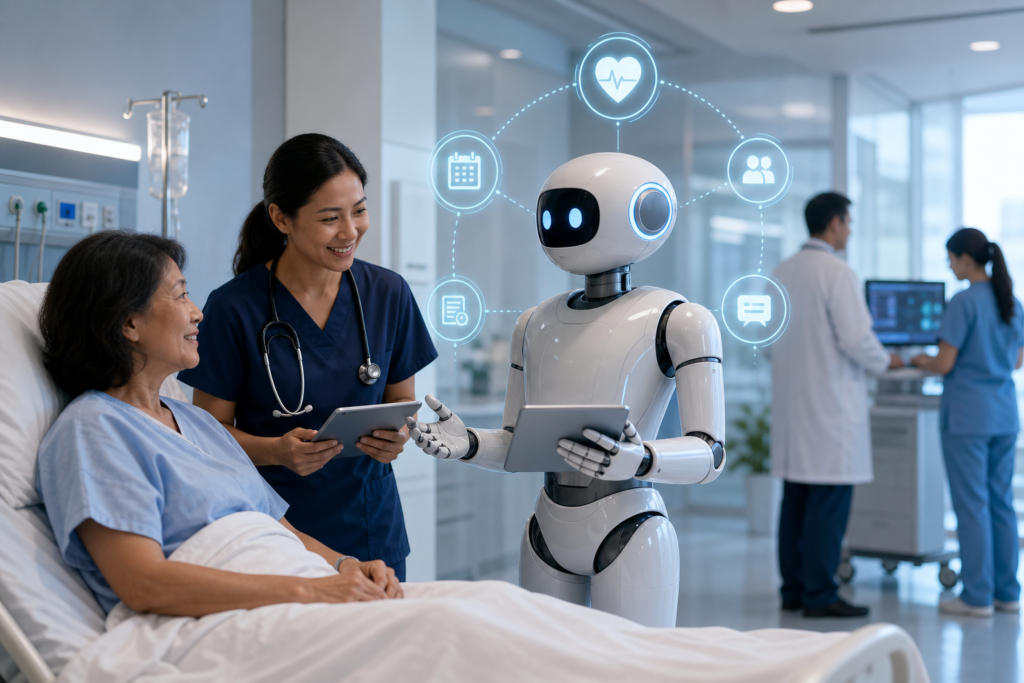
Healthcare is evolving at an unprecedented pace, with technology paving the way for improved patient outcomes and operational efficiency. Among the various technological advancements, AI agents are proving to be particularly transformative for hospital systems. These intelligent systems streamline processes, reduce wait times, and offer personalized healthcare solutions, thereby enhancing the overall quality of patient care.
The integration of AI agents in hospitals primarily focuses on improving patient experiences and operational workflows. By automating routine tasks, AI allows healthcare professionals to concentrate on more pressing challenges, ultimately leading to better care management. This article delves into the multifaceted role of AI agents in hospitals, examining the benefits they offer, the challenges that may arise, and real-world applications that illuminate their potential.
Enhancing Operational Efficiency
AI agents streamline numerous administrative and operational tasks within hospitals, significantly enhancing efficiency. By reducing the burden of paperwork and routine inquiries, hospitals can redirect resources toward direct patient care.
Automating Administrative Processes
- Appointment Scheduling: AI agents can manage appointment systems, allowing patients to schedule, reschedule, or cancel appointments easily through voice commands or mobile applications.
- Patient Check-In: Automated check-in systems reduce waiting times, enabling patients to complete necessary forms digitally and check in upon arrival.
- Billing and Insurance Verification: AI can handle billing inquiries and insurance verifications, accelerating the financial processes that often delay patient treatments.
Streamlining Communication
AI agents facilitate seamless communication between patients and healthcare providers. This communication is pivotal for timely interventions, especially in emergency situations.
- Real-Time Updates: Patients can receive updates on their treatment status, test results, and medication reminders through AI-powered messaging systems.
- Virtual Assistants: AI agents act as virtual healthcare assistants, providing instant answers to patient questions and enabling quick access to medical information.
Improving Patient Care
In addition to enhancing operational efficiency, AI agents play a crucial role in improving the quality of patient care. They enable healthcare providers to deliver more personalized and precise medical solutions.
Personalized Treatment Plans
By utilizing patient data and historical records, AI agents can analyze vast amounts of information to recommend personalized treatment plans tailored to individual patient needs.
- Predictive Analytics: By examining patient histories, AI can forecast potential health issues, allowing for early interventions.
- Tailored Medication Management: AI can assist in determining the most effective medication regimens based on a patient’s unique genetic makeup and medical history.
Enhancing Diagnostic Accuracy
AI systems are becoming instrumental in diagnostics. They assist healthcare providers by analyzing images and data, thus reducing the incidence of human error.
- Image Recognition: AI can interpret medical images with remarkable accuracy, aiding in the detection of conditions such as tumors at much earlier stages.
- Clinical Decision Support: AI tools provide evidence-based recommendations to clinicians, ensuring that the right decisions are made for patient care.
Challenges and Considerations
Despite the immense benefits of integrating AI agents in hospitals, certain challenges must be addressed to fully leverage their potential. Understanding these obstacles can help healthcare organizations adopt these technologies more effectively.
Data Security and Privacy
With the introduction of AI agents, protecting patient data becomes paramount. Hospitals must ensure that all AI systems adhere to stringent security protocols to prevent data breaches.
Integration with Existing Systems
Implementing AI solutions requires careful planning, especially when integrating with existing hospital information systems. Ensuring compatibility can be resource-intensive and complex.
Training Healthcare Staff
Healthcare personnel need adequate training on utilizing AI tools effectively. Ongoing education is vital to ensure that staff members can interact seamlessly with AI agents and interpret their recommendations appropriately.
Case Studies of AI Agents in Hospitals
Numerous hospitals around the world have successfully integrated AI agents into their systems. These case studies highlight the transformative power of these tools.
Case Study: Mount Sinai Health System
With its AI initiative, Mount Sinai implemented a chatbot for patient inquiries, significantly reducing the workload of its administrative staff. This innovation led to a 30% decrease in wait times for patients seeking information.
Case Study: Mayo Clinic
The Mayo Clinic utilized AI to enhance diagnostic imaging, resulting in improved accuracy rates for the detection of certain cancers. This technology helped radiologists make more informed decisions faster.
Looking Forward: The Future of AI in Healthcare
The potential for AI agents in hospitals is limitless, with ongoing advancements promising even greater improvements in patient care and operational efficiency. Future developments may include:
- Increased use of telemedicine powered by AI agents, allowing for even broader access to care.
- Enhanced capabilities in predictive analytics, helping hospitals to allocate resources more intelligently based on patient needs.
- Greater personalization in treatment plans through continued evolution of machine learning algorithms.
FAQs
What specific tasks can AI agents perform in hospitals?
AI agents can handle a variety of tasks, including appointment scheduling, patient check-ins, billing processes, communication with patients, and even diagnostic analyses.
How do AI agents improve patient outcomes?
AI agents enhance patient outcomes by providing personalized treatment recommendations, reducing wait times, and ensuring timely communication of medical information.
What are the primary concerns regarding AI in healthcare?
Primary concerns include data privacy and security, the need for integration with existing systems, and the importance of training staff to use AI tools effectively.
Are AI agents cost-effective for hospitals?
While the initial investment in AI technology can be substantial, the long-term savings from improved efficiency, reduced staffing needs for administrative tasks, and enhanced patient care can lead to significant cost-effectiveness.
What is the future potential of AI agents in healthcare?
The future potential of AI agents in healthcare is vast, promising improvements in telemedicine, predictive analytics, and personalized patient care, shaping a more efficient and responsive healthcare landscape.