The integration of AI in e-commerce is transforming how businesses operate, offering innovative solutions to enhance customer experiences and streamline operations. Companies leveraging AI agents can automate repetitive tasks, improve customer support, and optimize inventory management, significantly boosting operational efficiency.
This article explores real-world applications of AI in the e-commerce sector, focusing on practical use cases and the tangible benefits these technologies provide. From automating customer inquiries to providing alerts for inventory management, understanding these implementations can pave the way for your business’s digital transformation.
Key AI Agent Functions
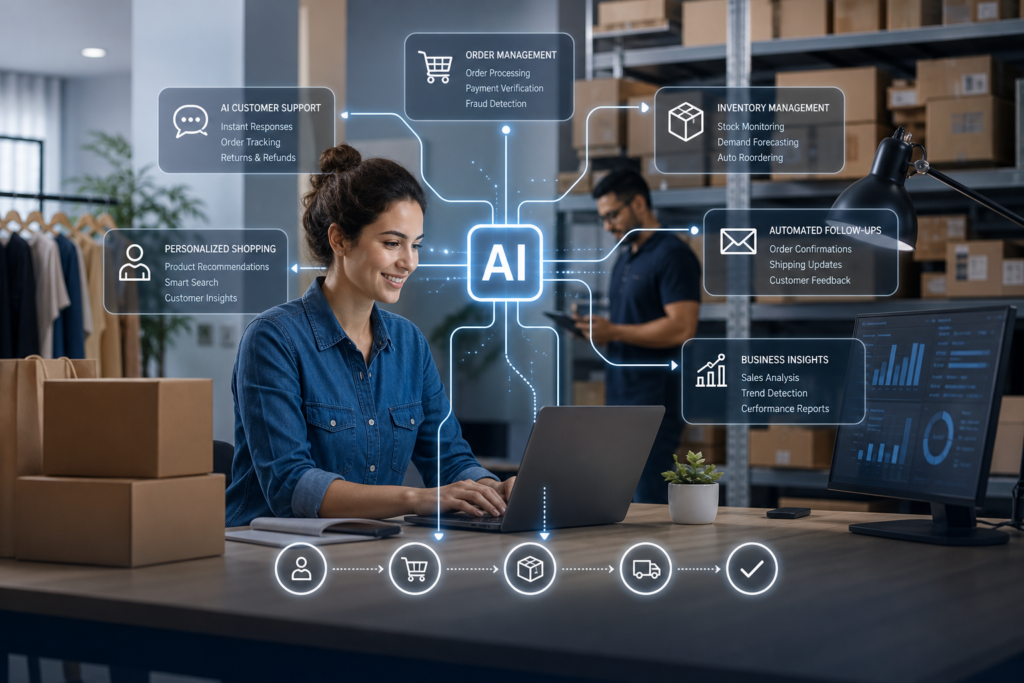
AI agents in e-commerce serve various functions that directly affect customer interactions and operational processes. Some of the key functionalities include:
- Automated Customer Support: AI agents can handle queries, complaints, and requests for information at any time of day, providing immediate responses that enhance customer satisfaction.
- Follow-Up Automation: After a purchase or inquiry, AI systems can send automated emails or messages to customers, offering them additional information or inviting them to provide feedback.
- Inventory Management: AI agents can track inventory levels in real-time, send alerts for low stock, and predict future inventory needs based on sales trends, helping to avoid overstocking or stockouts.
- Personalized Recommendations: By analyzing customer behavior, AI can provide personalized product recommendations, improving sales potential and customer engagement.
- Data Analysis: AI can analyze vast amounts of data to identify trends, customer preferences, and potential bottlenecks in the sales process.
Case Study: Automated Customer Inquiries
A leading e-commerce company implemented an AI-driven chatbot to manage customer inquiries efficiently. Prior to this implementation, customers faced long wait times, leading to dissatisfaction. The chatbot was developed to handle common queries about order status, product information, and return policies.
Through natural language processing, the AI agent could understand customer requests and provide accurate answers instantly. This not only improved customer satisfaction but also freed up human agents to handle more complex issues, optimizing the overall customer service experience. After the implementation, the company reported a 30% decrease in response times and a significant increase in positive customer feedback.
Case Study: AI-Powered Inventory Alerts
Inventory management is crucial for e-commerce operations, and one retailer integrated an AI system to improve this process. The AI agent monitored stock levels and historical sales data to predict when items needed to be restocked. Additionally, it generated alerts for low inventory levels and suggested optimal reorder quantities.
This approach minimized instances of stockouts, ensuring customers could always find the products they wanted. The retailer experienced a 20% reduction in inventory holding costs due to more accurate inventory management and timely reordering processes.
Benefits and Limitations of AI in Retail
Implementing AI in e-commerce comes with multiple benefits, including:
- Enhanced Efficiency: Automating routine tasks allows human employees to focus on more strategic work, improving overall productivity.
- Improved Customer Experience: Quick responses to inquiries and personalized recommendations lead to higher customer satisfaction and loyalty.
- Data-Driven Decisions: Access to advanced analytics allows businesses to make informed decisions, leading to optimized operations and marketing strategies.
However, there are limitations to consider:
- Human Oversight Required: While AI can handle many tasks, human oversight is vital, especially in dealing with complex customer issues or sensitive data.
- Implementation Costs: The initial investment in developing and integrating AI systems can be significant, which may deter smaller businesses.
- Dependence on Data Quality: AI’s effectiveness relies heavily on the quality of data it processes. Poor data can lead to incorrect predictions or recommendations.
FAQ
What is E-commerce automation?
E-commerce automation refers to the use of technology to automate repetitive tasks within an e-commerce business. This includes customer support, inventory management, and marketing campaigns.
How can AI enhance customer support?
AI-enhanced customer support can provide instant responses to inquiries, handle multiple requests simultaneously, and reduce wait times for customers, thus improving their overall experience.
What are some limitations of using AI in retail?
Some limitations include the necessity for human oversight, initial implementation costs, and the dependence on high-quality data for accurate operations.
Exploring Custom AI Agents
As e-commerce continues to evolve, businesses that adopt AI-driven solutions stand to gain a competitive edge. Custom AI agents tailored to fit your specific workflow can elevate the efficiency and effectiveness of your operations. By leveraging AI, you can enhance customer experiences, optimize inventory management, and ultimately drive growth.
For businesses looking to explore how AI can be integrated into their operations, contact SamSiyu to discuss your AI agent ideas. Our experience in developing custom solutions can help you evaluate workflows for potential automation and design AI agents customized to meet your unique needs.