As e-commerce continues to grow rapidly, businesses face several operational challenges, including inventory management, customer support, and order processing. Navigating these complexities can often lead to inefficiencies that hinder growth and customer satisfaction. Implementing AI-powered automation can provide solutions to these challenges by streamlining processes and enhancing operational efficiency.
AI agents hold the potential to revolutionize e-commerce operations by automating repetitive tasks, improving accuracy, and reducing response times. This article explores the significant applications of e-commerce AI automation, delving into how businesses can leverage these technologies to enhance their operational workflows.
Understanding E-commerce Challenges
E-commerce businesses often juggle various tasks, from managing a vast inventory to responding promptly to customer inquiries. Some prevalent challenges include:
- High Volume of Orders: As sales increase, so does the strain on order processing systems.
- Inventory Management: Maintaining optimal stock levels without overstocking or stockouts is critical.
- Customer Support: Providing timely assistance to customers can be taxing without proper tools.
- Integration with Existing Systems: Ensuring that all systems communicate effectively can be complex.
These challenges often result in lost sales, dissatisfied customers, and operational inefficiencies. AI-powered solutions can help mitigate these issues by automating key processes and enabling better resource management.
Role of AI Agents in Solving Operational Issues
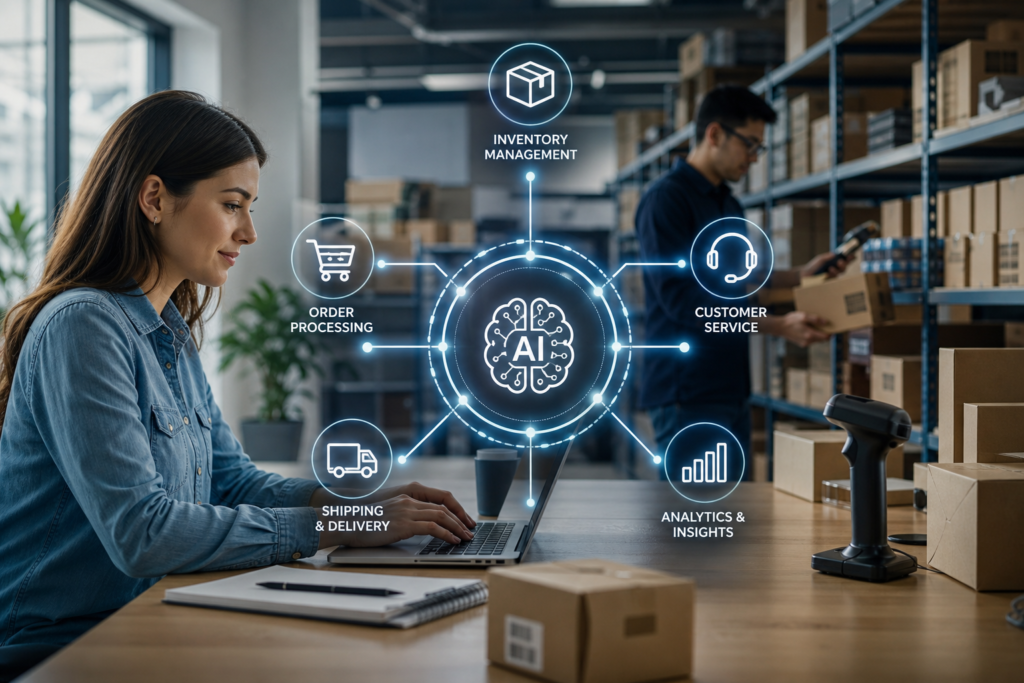
AI agents are designed to mimic human decision-making in specific tasks. In the realm of e-commerce, they can significantly enhance processes across three key areas: inventory management, customer service, and order processing.
1. Inventory Management
AI agents can streamline inventory management by:
- Predictive Analysis: Utilizing historical data to forecast demand patterns, ensuring optimal inventory levels.
- Automated Reordering: Setting thresholds for reordering stock based on predictive insights, thus preventing stockouts or excess inventory.
- Real-time Tracking: Monitoring inventory levels across multiple platforms and alerting staff when action is required.
Such automation allows businesses to improve stock accuracy, reduce human errors, and save on operational costs.
2. Customer Service Bots
AI-powered customer service bots serve as valuable tools for e-commerce businesses by:
- 24/7 Availability: Providing customers with immediate responses to inquiries at any hour, enhancing user experience.
- Handling FAQs: Addressing common questions and concerns, thus freeing human agents for more complex inquiries.
- Personalized Recommendations: Analyzing customer behavior to suggest products that align with their interests.
This level of automation not only improves response times but also enhances customer satisfaction, driving repeat business.
3. Order Processing Automation
Automating order processing can optimize workflow through:
- Automated Order Entry: Reducing the need for manual input and speeding up the order fulfillment process.
- Tracking and Updates: Implementing automated updates for customers about their order status, improving transparency.
- Integration with Shipping Systems: Facilitating seamless transitions between order entry and shipping operations.
These automation strategies can lead to faster fulfillment times and reduced operational risks.
Real-World Examples of AI-Powered Automation
Numerous e-commerce businesses have successfully implemented AI solutions to enhance their operations. Consider these examples:
Case Study: Fashion Retailer
A leading fashion retailer integrated an AI-powered inventory management system that utilized machine learning to predict trends based on seasonality and sales history. As a result, the business reduced excess inventory by 30% and improved stock availability, significantly enhancing customer satisfaction.
Case Study: Home Goods E-commerce
An e-commerce home goods provider deployed AI chatbots for customer service, resulting in a 40% decrease in response times. The bots handled routine queries, allowing human agents to focus on complex customer issues, which led to increased overall efficiency and customer retention rates.
Implementation Considerations for Businesses
While the benefits of AI automation are significant, businesses must consider several factors for successful implementation:
- Assessment of Current Systems: Evaluate existing technologies to ensure seamless integration with AI solutions.
- Data Management: Ensure that high-quality data is available for effective AI training and management.
- Change Management: Prepare the staff for new processes and workflows that come with automation.
These steps are crucial for maximizing the benefits of AI implementation and minimizing potential disruptions.
FAQ
What types of e-commerce tasks can AI agents automate?
AI agents can automate tasks such as inventory management, order processing, customer support, and personalized marketing efforts.
How do I choose the right AI solutions for my e-commerce business?
Identify specific pain points your business faces and evaluate solutions that directly address those areas, ensuring compatibility with your current systems.
Will implementing AI require significant changes to my business processes?
While some adjustments may be necessary, focusing on integration and training can smooth the transition and mitigate disruptions.
Exploring the Future of E-commerce with AI
As e-commerce continues to evolve, the integration of AI-powered automation will be instrumental in driving operational efficiency and customer satisfaction. By automating essential processes, businesses can focus on strategic growth while enhancing their customer experience.
If you’re dealing with repetitive tasks or fragmented workflows, consider reaching out to learn how AI agents can revolutionize your business operations. Talk to SamSiyu about a custom AI agent for your business. Discover how to reduce manual effort and improve efficiency through tailored AI automation solutions.