Current Inefficiencies in Healthcare Workflows
The healthcare sector is often bogged down by administrative tasks such as verifying patient information, scheduling appointments, and managing records. These responsibilities typically require significant time and personnel, leading to:- Increased wait times for patients
- Higher administrative costs
- Risk of human error in data entry
- Reduced staff morale due to repetitive tasks
AI’s Role in Optimizing Processes
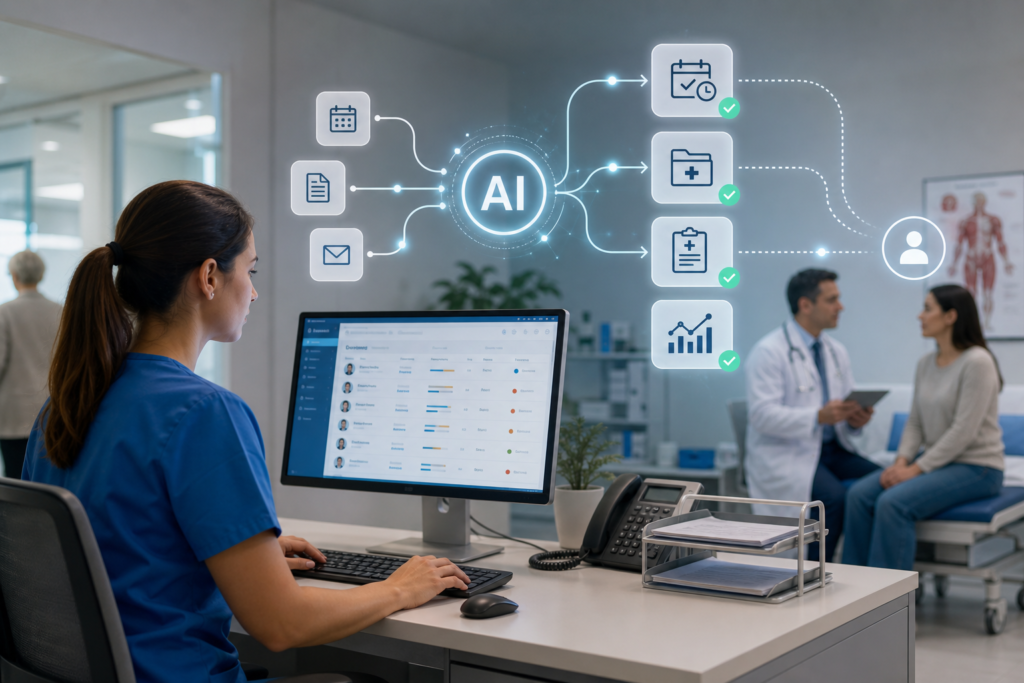
AI agents can automate various elements of healthcare workflows, focusing on enhancing aspects that are often the most cumbersome. Here are key areas where AI can make a significant difference:Patient Scheduling
AI-driven scheduling systems use algorithms to optimize appointment slots based on patient needs and provider availability. Benefits include:- Reduction in no-shows through automated reminders
- Efficient use of available time slots
- Enhanced patient satisfaction due to personalized scheduling
Record Management
The management of medical records is another area where AI agents excel. Through natural language processing and machine learning, AI can:- Automate data entry for patient information
- Streamline retrieval of patient history during consultations
- Enhance data accuracy by minimizing human error
Success Stories from Healthcare Providers
Several healthcare providers have effectively utilized AI to transform their workflows. Here are two noteworthy examples:A Large Urban Hospital
A large urban hospital integrated an AI scheduling system that reduced appointment scheduling time by 30%. The system sent automated reminders to patients, decreasing no-show rates by 25%. Administrative staff reported feeling less overwhelmed, allowing them to focus more on patient interaction and less on data entry.A Community Health Clinic
A community health clinic implemented an AI-powered record management system that improved patient data retrieval speeds. Medical professionals experienced a 40% reduction in time spent on record management tasks, enabling them to devote more hours to direct patient care. This led to improved ratings in patient satisfaction surveys.Implementation Considerations for AI in Healthcare
While the benefits of AI in healthcare workflows are clear, careful planning for implementation is essential. Here are critical considerations:- Data Security: Patient data privacy must always be prioritized. Ensure that AI systems comply with healthcare regulations such as HIPAA.
- System Compatibility: AI solutions should integrate seamlessly with existing systems to minimize disruption.
- Training Needs: Staff must be adequately trained on new systems to optimize usage and minimize errors.
- Scalability: Select solutions that can grow with your organization’s evolving needs.
Frequently Asked Questions
What is healthcare workflow automation?
Healthcare workflow automation involves using technology, such as AI agents, to streamline and optimize processes within healthcare organizations, ultimately reducing the manual workload and improving efficiency.
How can AI agents improve patient scheduling?
AI agents can improve patient scheduling by automating the appointment booking process, offering reminders, and effectively managing available slots to reduce wait times and enhance patient satisfaction.
What are the risks of implementing AI in healthcare?
Risks include data security concerns, the requirement for staff training, and the potential for system integration issues. However, with proper planning and partnerships, these risks can be managed effectively.
In summary, implementing AI agents in healthcare can drastically optimize workflows, particularly in patient scheduling and record management. By reducing administrative burdens, healthcare providers can focus more on patient care, which is ultimately what matters most.If your organization grapples with inefficient workflows, consider discussing your AI agent idea with SamSiyu. Let us evaluate your administrative challenges and explore how we can design a custom AI agent tailored to your specific processes. Reach out today and take the first step towards optimizing your healthcare operations.