Understanding Customer Support Challenges
Customer support departments often face significant challenges that hinder their effectiveness. A high volume of inquiries can overwhelm staff, leading to longer wait times and frustrated customers. Additionally, providing consistent and accurate information while juggling multiple communication channels can strain resources. Here are some common problems in customer support:
- High inquiry volume: During peak times, the influx of requests can outstrip staff capacity.
- Inconsistent service: Varied responses from different agents can confuse customers and damage brand trust.
- Limited operational hours: Many businesses struggle to provide 24/7 support, leaving out-of-hours inquiries unanswered.
Implementing AI in customer support can address these issues by automating responses and ensuring consistent information delivery, ultimately improving customer satisfaction and operational efficiency.
AI Agent Capabilities in Support Roles
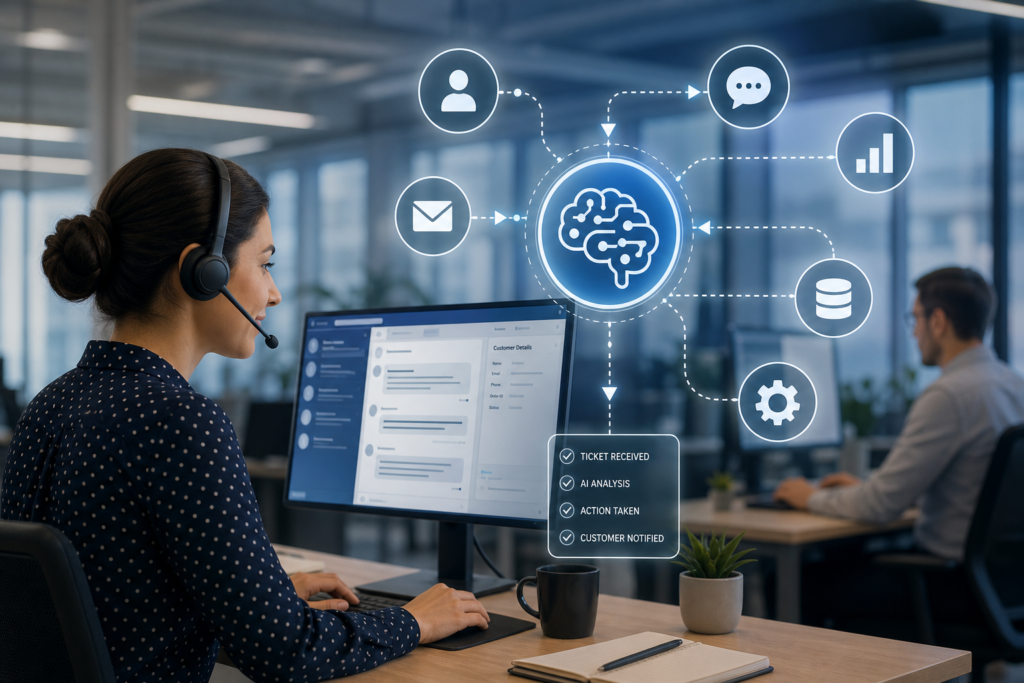
AI agents can perform a variety of functions that significantly enhance customer support. Here are key capabilities:
- Automated response systems: AI agents can handle FAQs and common inquiries, providing quick resolutions.
- 24/7 availability: They operate around the clock, ensuring that customer support is accessible anytime, which is especially vital for global businesses.
- Data collection and analysis: AI agents can gather insights from customer interactions, identifying trends and areas for improvement.
- Integration with existing systems: AI can connect seamlessly with CRM platforms, enhancing the context of customer interactions.
These capabilities not only reduce the burden on human staff but can also lead to higher customer retention rates due to improved responsiveness.
Examples of Successful AI Integration
Many businesses across different sectors have successfully implemented AI agents in their customer support frameworks. Here are a few examples that showcase the versatility of AI-powered solutions:
E-commerce
Online retailers have employed AI chatbots to assist with inquiries on order status, product availability, and returns. For instance, a well-known online clothing brand uses an AI system that handles up to 80% of customer inquiries, allowing human agents to address more complex issues.
Healthcare
In the healthcare sector, AI agents are deployed to manage appointment scheduling and response to common patient questions, like office hours and medication refills. A healthcare clinic utilizing AI chatbots reports a 50% decrease in appointment scheduling time, allowing staff to focus on patient care.
Hospitality
Hotels integrate AI in their customer interactions, providing a 24/7 concierge service through chatbots. Guests can ask questions about facilities or make reservations without needing to wait for human assistance, enhancing the overall experience.
Guidelines for Choosing the Right AI Solution
Selecting the appropriate AI agent for your customer support needs can be daunting. Here are essential guidelines to help you make an informed decision:
- Assess your goals: Determine what you want to achieve with an AI agent—whether it’s reducing response times, managing high volumes of inquiries, or enhancing customer engagement.
- Evaluate integration capabilities: Ensure that the AI solution can seamlessly integrate with your existing CRM and customer support tools.
- Consider scalability: Choose a solution that can grow with your business demands, accommodating traffic increases and expanding capabilities as needed.
- Prioritize user experience: The interface should be intuitive for both customers and support staff to maximize efficiency.
By following these guidelines, businesses can identify AI solutions that align with their operational needs and enhance customer satisfaction effectively.
Next Steps for Deployment
Once you have selected an AI solution, the next phase involves implementation and monitoring. Here are steps to consider during this process:
- Training the AI: Input diverse data sets to train the AI agent effectively, ensuring it can respond accurately to various inquiries.
- Monitoring and adjusting: After deployment, continuously monitor the AI’s performance, collecting feedback to refine its capabilities and address gaps in service.
- Human oversight: Maintain a balance between automation and human intervention, particularly for complex queries that require empathy or nuanced understanding.
Implementing AI agents requires careful planning and a responsive approach to ongoing adjustments, but the benefits can be transformative.
FAQ
What industries benefit most from AI in customer support?
Industries such as e-commerce, healthcare, and hospitality see significant advantages from AI, as they often handle high volumes of customer interactions and require immediate responses.
Can AI fully replace human customer support agents?
While AI can manage many routine inquiries, human agents are essential for complex situations that require empathy or detailed knowledge, ensuring a balanced approach.
How does AI integration improve customer experience?
AI integration streamlines responses, reduces waiting times, and ensures consistent quality across customer interactions, leading to higher satisfaction and loyalty.
Transform Your Customer Support with AI
In today’s competitive landscape, automating customer support using AI agents not only addresses key operational challenges but also enhances the customer experience. By understanding the capabilities of AI, exploring successful case studies, and following best practices for implementation, businesses can create a robust support system. If you are interested in transforming your customer support with a custom AI agent, talk to SamSiyu about your specific needs. By sharing your repetitive or fragmented workflows, we can help evaluate where AI can make a difference for your business.