Small and medium-sized businesses (SMBs) continually seek ways to streamline operations and enhance productivity. Embracing technology, particularly Artificial Intelligence (AI), has become a vital strategy for achieving operational efficiency. AI agents can automate myriad tasks, significantly reducing the manual workload on employees and optimizing business processes.
This article delves into how SMBs can incorporate AI agents into their workflows, providing clear insights and practical steps for implementation. From reducing response times to connecting disparate software systems, the transformative potential of AI for SMBs is immense.
Defining AI Agents and Their Significance for SMBs
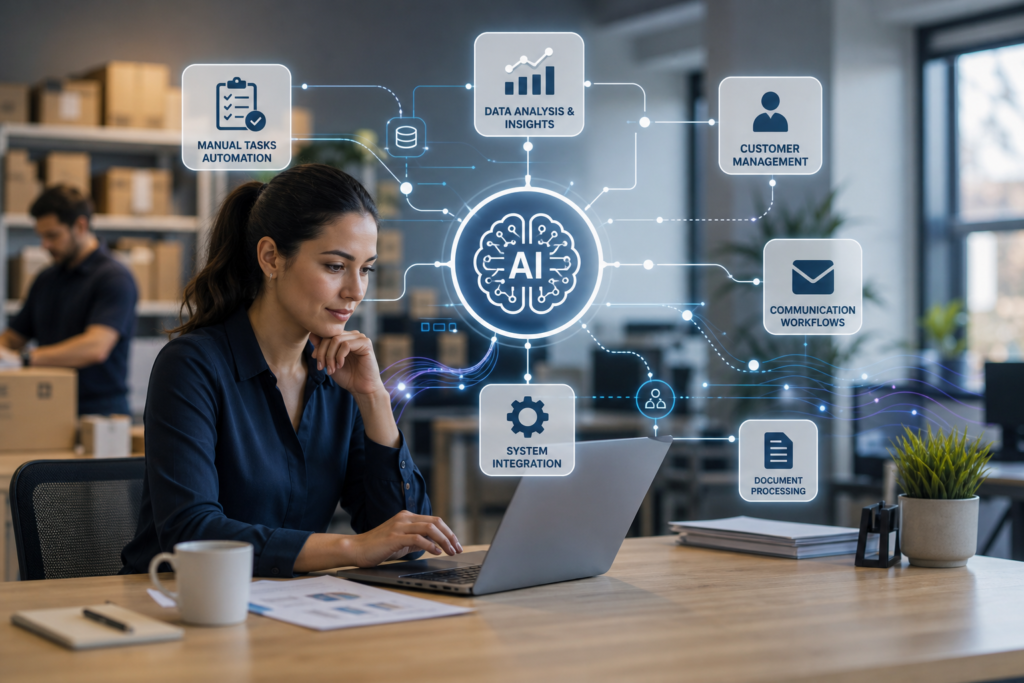
AI agents are software programs designed to perform specific tasks autonomously or semi-autonomously. These agents can learn from data, adapt to changing conditions, and make decisions without human intervention. For SMBs, AI agents can be applied in various scenarios, such as customer support, administrative tasks, and process automation.
The significance of AI agents for SMBs lies in their ability to:
- Reduce the time spent on repetitive tasks, allowing employees to focus on higher-value work.
- Enhance customer service with quicker response times and personalized interactions.
- Improve data management and accessibility by integrating multiple systems.
- Facilitate cost savings through process optimization and efficiency gains.
Real-Life Examples of AI Efficiency Gains
Various SMBs have successfully implemented AI agents to achieve significant efficiency improvements. Here are a few examples:
1. E-commerce and Retail
A small online retailer utilized an AI-powered chatbot to handle customer inquiries and process orders during peak shopping seasons. As a result, they experienced a 30% reduction in response time and a notable increase in customer satisfaction rates.
2. Healthcare
A local clinic integrated AI agents into their appointment scheduling and patient follow-up processes. This automation led to a 25% decrease in scheduling errors and enhanced patient engagement, ultimately improving overall operational efficiency.
3. Real Estate
A property management firm deployed AI agents for tenant communications and maintenance requests. The automation provided immediate responses to tenants, reducing the workload on property managers and increasing the speed of maintenance resolutions.
Identifying Repetitive Workflows Suitable for AI
SMBs should begin by identifying workflows that are repetitive and time-consuming. Here are some areas where AI can play a significant role:
- Customer Support: Automating responses to frequently asked questions can save time and provide immediate assistance.
- Data Entry: Using AI to enter data from various sources can minimize human error and improve accuracy.
- Lead Qualification: AI can analyze incoming queries, classify them, and prioritize them based on predetermined criteria.
- Inventory Management: Automating stock monitoring and reorder requests can streamline retail operations.
Step-by-Step Guide to Implementation
Implementing AI agents in your SMB requires a strategic approach. Here’s a step-by-step guide to consider:
1. Assess Your Needs
Begin by evaluating which processes require automation. Focus on areas with high repetition or bottlenecks.
2. Choose the Right Tools
Research available AI tools and platforms that fit your requirements. Consider integration capabilities with your existing systems.
3. Develop a Custom AI Agent
Engage professionals to develop a tailored AI solution that aligns with your specific business workflows.
4. Implementation and Testing
Roll out the AI agent in a controlled environment. Monitor its performance and collect feedback for optimization.
5. Training and Adoption
Educate your team on utilizing the new systems effectively. Facilitate initial training sessions to ease the transition.
Frequently Asked Questions
What types of tasks can AI agents automate?
AI agents can automate various tasks, including customer support inquiries, data entry, appointment scheduling, inventory management, and more. They are most effective in repetitive and rule-based tasks.
How do I choose the right AI tools for my business?
Consider your specific needs, existing systems, and budget. Look for tools that offer integration capabilities, user-friendliness, and customer support. Reviewing testimonials and case studies can also guide your decision.
Is human oversight still necessary for AI systems?
While AI can handle many tasks autonomously, human oversight is crucial for complex decision-making, maintaining quality, and addressing unique situations. AI should complement human efforts rather than replace them entirely.
Embracing AI Technology for a Competitive Edge
Incorporating AI agents into your SMB can unlock significant operational efficiencies, freeing your team from mundane tasks and allowing them to focus on strategic initiatives. As demonstrated through various industries, the benefits of AI in enhancing productivity and improving response times are profound. To explore how a custom AI agent could transform your business workflows, contact SamSiyu today to discuss your AI automation needs and see how we can help you implement the right solutions for your unique challenges.