In today’s fast-paced business environment, effective workflow design has become critical. AI-powered automation can significantly enhance operational efficiency by streamlining repetitive tasks, connecting various business systems, and optimizing processes. The goal is to leverage AI agents to create workflows that minimize manual intervention, allowing employees to focus on higher-value tasks.
This guide explores the essential steps and principles of AI workflow design, helping businesses assess their existing workflows and implement solutions tailored to their needs. By the end, you will understand how to take practical steps towards effective automation and workflow optimization.
Key Principles of Successful AI Workflows
To create efficient workflows powered by AI, understanding foundational principles is indispensable:
- Clarity of Purpose: Define the specific business goals you aim to achieve through automation. This clarity will guide the design process and ensure alignment with broader company objectives.
- Data Accessibility: AI agents thrive on data. Ensure that relevant data sources are accessible and organized, allowing the AI to make informed decisions.
- Human Oversight: Recognize scenarios where human judgment is crucial. While AI agents can handle many tasks, human intervention is vital in decision-making processes where nuance and discretion are required.
- Iterative Design: AI workflow design is not one-and-done. Be prepared to iterate and refine your workflows based on performance metrics and user feedback.
Assessing Existing Workflows for Automation
The first step towards effective AI workflow design is conducting a comprehensive assessment of your existing workflows. Here’s how to do it:
- Map Current Processes: Create a visual representation of your existing workflows to identify bottlenecks, redundancies, and inefficiencies.
- Identify Pain Points: Gather feedback from employees to pinpoint tasks that are repetitive, time-consuming, or prone to error.
- Evaluate Tools and Systems: Assess the current systems in use (CRM, databases, APIs) and identify opportunities for integration with AI solutions, which can enhance data flow and communication.
Step-by-Step Design of an AI Workflow
Once you have assessed your existing workflows, it’s time to design an AI-driven solution that improves efficiency. Follow these steps to create your AI workflow:
Step 1: Define Objectives and Success Metrics
Start with a clear definition of what you aim to achieve with your AI workflow, whether that’s reduced response times, improved customer satisfaction, or cost savings. Along with objectives, establish measurable success metrics to evaluate the workflow’s effectiveness post-implementation.
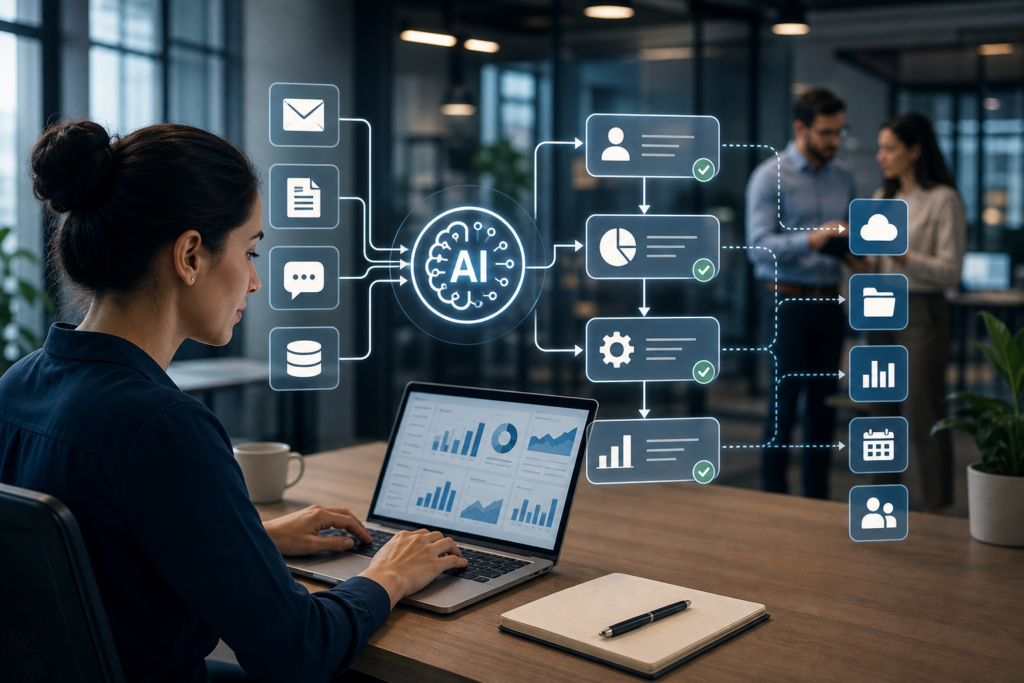
Step 2: Design the Workflow Architecture
Draft the architecture of your AI workflow, including all processes, decision points, and technological components. Determine how information will flow through the workflow and what systems will be integrated.
Step 3: Select AI Tools and Technologies
Choose AI tools and technologies best suited for your workflow. Whether you opt for a custom AI agent, a no-code automation platform like n8n, or specific integrations with existing software, ensure the tools align with your defined goals.
Step 4: Develop and Pilot the Workflow
Build the workflow, ensuring thorough testing in a controlled environment. A pilot project allows you to identify unforeseen challenges and gather user feedback, which will support refinement.
Step 5: Implement and Monitor
After successful piloting, implement the workflow across the organization. Monitor performance regularly against your established metrics and make adjustments as necessary to optimize the solution.
Implementation Tips and Tools
When implementing your AI workflow, consider the following tips and tools:
- Engage Stakeholders: Involve employees who will use the workflow from the beginning to ensure a smoother transition and gain valuable insights.
- Training and Support: Provide adequate training and support for individuals interacting with the new workflow.
- Use Monitoring Tools: Employ analytics tools to track workflow performance and gather data for future improvements.
- Choose the Right AI Platform: Depending on the complexity of your needs, platforms like Zapier, n8n, or custom solutions can facilitate automation.
Next Steps for Custom AI Solutions
After implementing your AI workflow, you may need to explore further automation opportunities or tailor solutions specifically for your business context. Here are actionable next steps:
- Evaluate Additional Workflows: Continually assess other processes within your organization that could be optimized through AI.
- Solicit Expert Guidance: Consider consulting with companies like SamSiyu to explore custom AI solutions that can enhance your business processes further.
- Iterate and Improve: Analysis of performance metrics can lead to refinements and new ideas to enhance the workflow over time.
FAQs
What is AI workflow design?
AI workflow design refers to the process of creating automated workflows powered by artificial intelligence to enhance operational efficiency, reduce manual work, and improve decision-making through data-driven solutions.
How do I know if my workflows are suitable for automation?
Evaluate your workflows by identifying repetitive and time-consuming tasks. Involving user feedback and mapping existing processes can also help determine which areas may benefit from automation.
What tools can assist in AI workflow design?
Tools like n8n for workflow automation, Zapier for integrations, and various AI platforms can facilitate the design and implementation of effective AI workflows. The choice depends on your specific needs and existing technology stack.
AI workflow design can be a transformative endeavor for businesses looking to enhance operational efficiency and reduce mundane tasks. By assessing existing workflows, employing AI thoughtfully, and continuously optimizing based on feedback, you can leverage technology to create custom solutions that truly meet your operational needs.
For a practical discussion on how AI agents can improve your business processes, contact SamSiyu to discuss your specific needs and explore tailored solutions today.