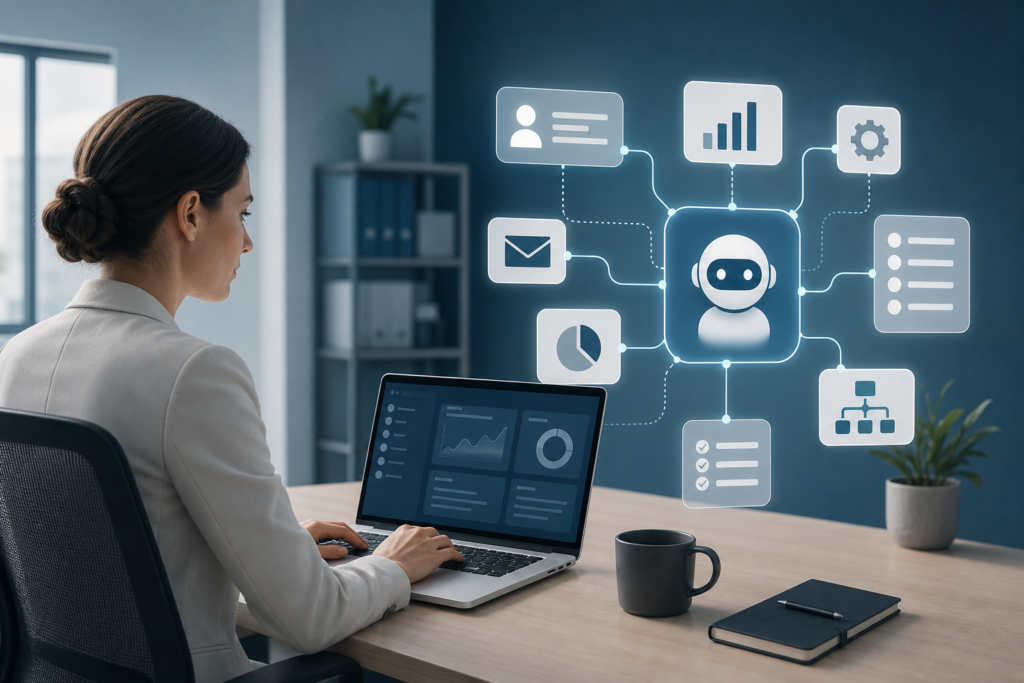
Definition of Custom AI Agents
Custom AI agents are intelligent software applications designed to perform specific tasks and processes tailored to a business’s unique operational needs. Unlike generic AI solutions, these agents are built from the ground up to integrate seamlessly with existing workflows, improving efficiency and reducing repetitive tasks. Custom AI agents leverage machine learning, natural language processing, and other advanced AI technologies to streamline processes, allowing businesses to focus on more strategic initiatives.
Steps in Developing a Custom AI Solution
Developing a custom AI agent involves several key steps that ensure the final solution meets the specific requirements of the business:
- Needs Assessment: Identify and analyze the specific operational challenges that the business faces. Understanding these needs is critical to developing a solution that targets the right areas.
- Workflow Analysis: Conduct a thorough analysis of existing workflows to pinpoint areas where automation can enhance efficiency. This includes evaluating workflows for redundancies, bottlenecks, and manual processes that could benefit from automation.
- Define Objectives: Set clear objectives for what the AI agent should achieve. This includes measurable goals that align with overall business objectives.
- Planning and Design: Create a design blueprint that outlines the architecture of the AI agent, including the technologies to be used, the data sources needed, and how the agent will interact with existing systems.
- Development: Proceed to develop the AI agent using appropriate programming languages and machine learning frameworks. Collaborate closely with development teams to adhere to the blueprint.
- Testing: Rigorously test the AI agent within a controlled environment to ensure it performs as expected. This step helps identify and resolve any issues before full deployment.
- Deployment: Launch the AI agent in the live environment. Ensure comprehensive training sessions for employees to understand how to interact with and leverage the new system effectively.
- Monitoring and Iteration: Post-deployment, monitor the AI agent’s performance. Collect feedback and data to make necessary adjustments, refining the agent over time to improve its effectiveness.
Identifying Areas for Automation in Business
Not every task can or should be automated. Here are common areas where businesses often find opportunities for automation:
- Customer Service: Implementing AI agents that handle FAQs and common inquiries can free up human resources for more complex issues.
- Data Entry: Automating routine data input can reduce human error and save time, especially in tasks involving large volumes of information.
- Sales Outreach: Using AI agents to schedule meetings, follow up on leads, or even qualify prospects can enhance sales team productivity.
- Marketing Campaigns: Custom AI agents can personalize marketing content and target messaging based on user interactions and preferences.
- Reporting and Analytics: Generating regular reports and analytics can be automated, allowing teams to focus on analyzing the information rather than compiling it.
Showcasing Successful Implementations
Real-world examples of custom AI agents can help illustrate their effectiveness. Here are a few success stories:
Case Study: E-Commerce Business
A medium-sized e-commerce retailer implemented a custom AI agent to manage inventory levels and reorder supplies automatically based on sales data and seasonal trends. This resulted in a 20% decrease in stockouts and a significant increase in customer satisfaction as products were consistently available.
Case Study: Digital Agency
A digital marketing agency developed an AI-driven chatbot to handle initial client queries and book appointments. This agent allowed the agency to allocate more time to strategic tasks, resulting in a 30% increase in client engagement and a boost in conversion rates.
Case Study: Professional Services Firm
A law firm implemented an AI agent to assist in contract review processes. By automating the identification of key clauses and potential issues, the firm reduced the review time by 40%, allowing lawyers to focus on more complex legal matters.
Measuring Effectiveness Post-Deployment
To ensure the custom AI agent meets business objectives, it is crucial to measure its effectiveness after implementation. Here are some suggested metrics:
- Time Savings: Calculate the hours saved by automating specific tasks and compare them to prior benchmarks.
- Efficiency Gains: Measure the speed and accuracy of processes before and after AI agent deployment.
- User Feedback: Collect qualitative feedback from employees using the AI agent to gauge satisfaction and identify any areas for improvement.
- Cost Efficiency: Track any changes in operational costs associated with the tasks the AI agent automates.
Conclusion
Custom AI agents offer immense potential for small and medium-sized businesses seeking to enhance their operational efficiency. By thoroughly understanding specific challenges, analyzing workflows, and following a structured development approach, companies can create tailored AI solutions that fit their needs.
If you’re interested in exploring how custom AI agents could be designed for your business, contact SamSiyu. Our team is ready to help you understand the possibilities and implement effective AI-powered workflows tailored specifically to your business needs.
FAQs
What are the costs associated with developing a custom AI agent?
The costs can vary significantly based on the complexity of the project, the technologies used, and the specific requirements of the business. It’s best to consult with an expert to get a tailored estimate.
How long does it take to develop and deploy a custom AI agent?
Development timelines can range from a few weeks to several months, depending on the project’s scope, the number of features required, and the resources available.
Can I integrate a custom AI agent with existing software?
Yes, one of the advantages of custom AI agents is their ability to be designed for seamless integration with existing systems, improving overall workflow and data consistency.
Do I need technical skills to operate a custom AI agent?
No, while some understanding of the technology can be beneficial, custom AI agents are designed to be user-friendly and typically include training and support for end-users.